


Legge 3 ottobre 2025 n. 147
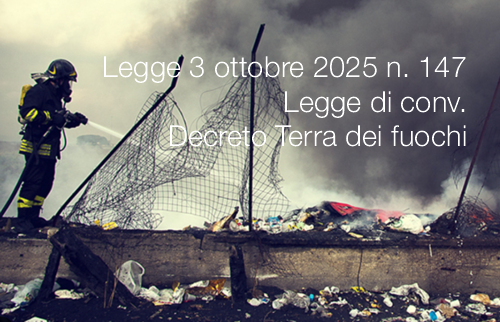
Legge 3 ottobre 2025 n. 147 / Legge di conv. Decreto Terra dei fuochi
ID 24697 | 07.10.2025
Legge 3 ottobre 2025 n. 147
Conversione in legge, con modificazioni, del decreto-legge 8 agosto 2025, n. 116, ...


















ID 27004 | 01.09.2026 / Attached
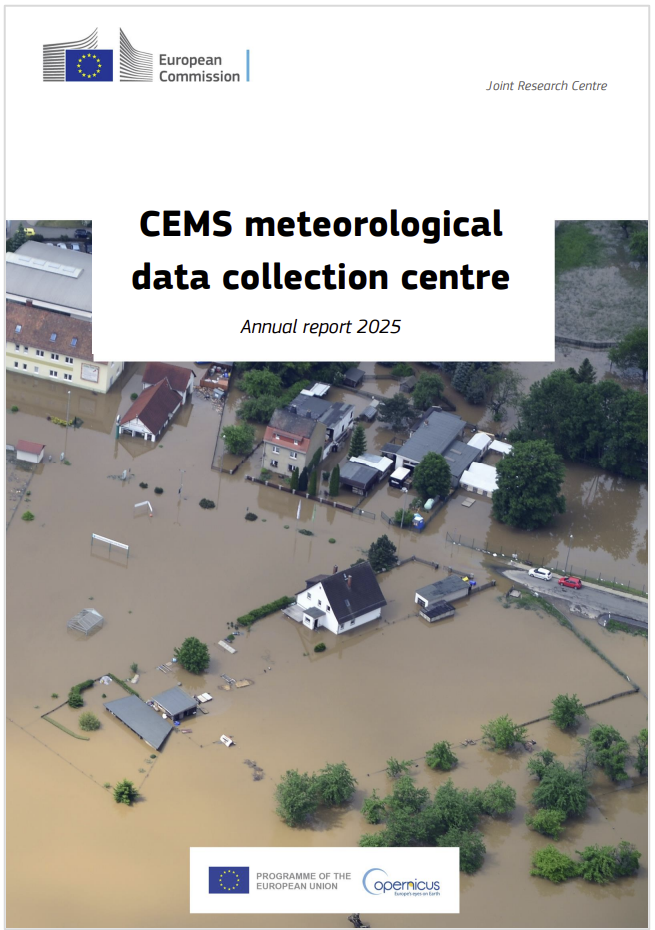
The Copernicus Emergency Management Service (CEMS) Meteorological Data Collection Centre (METEO) collects, quality-controls and post-processes in situ and ground-based remote sensed meteorological data to provide input data tailored to the needs of CEMS European Flood Awareness System (EFAS), and the CEMS European Forest Fire Information System (EFFIS).
All data are quality controlled. Data post-processing includes the calculation of minimum, maximum, and mean values as well as the aggregation of totals over different accumulation periods. Data are then provided to CEMS as station lists and grids.
This report provides an overview of the data collection, quality control, and post-processing activities completed during the year 2025.
In 2025, METEO collected real-time data for 11 parameters from 41 data providers and around 26,900 stations. On average, 9,500,000 records were added to the database each day. Furthermore, the database included more than 43,000 stations with historical data.
METEO constantly strives to improve the configuration of the database to enhance product generation. A substantially revised data validation protocol was implemented operationally in 2024 and used for the quality control of near-real time and historic data.
This effort led to an updated version of the European Meteorological Observation high-resolution multi-variable gridded dataset. Finally, this report suggests a future data collection strategy.
...
JRC 31.08.2026
attached
Il Copernicus Emergency Management Service (CEMS) è uno dei sei servizi core di Copernicus, il programma di osservazione della Terra dell'Unione Europea. Il CEMS fornisce informazioni geospaziali gratuite e tempestive basate su immagini satellitari e dati in-situ per supportare la gestione di catastrofi naturali, emergenze causate dall'uomo e crisi umanitarie in tutto il mondo.
Il servizio è gestito direttamente dalla Commissione Europea attraverso il Centro comune di ricerca (JRC) e opera 24 ore su 24, 365 giorni all'anno.
ID 24697 | 07.10.2025
Legge 3 ottobre 2025 n. 147
Conversione in legge, con modificazioni, del decreto-legge 8 agosto 2025, n. 116, ...
ID 21355 | 13.02.2024
La richiesta di una gestione sostenibile delle bonifiche, secondo la qu...
Update Luglio 2018
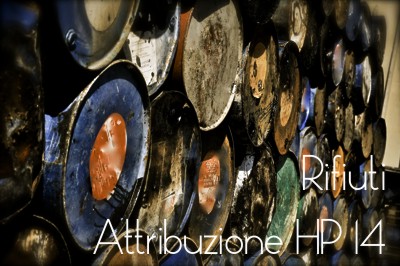
Il Regolamento (UE) 2017/997 in vigore dal 5 luglio 2017 e si applica dal 5 luglio 2018 definisce i criteri comunita...
Testata editoriale iscritta al n. 22/2024 del registro periodici della cancelleria del Tribunale di Perugia in data 19.11.2024