


Innalzamento livello medio del mare a Venezia
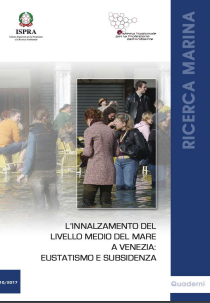
L’innalzamento del livello medio del mare a Venezia: eustatismo e subsidenza
Si propone un aggiornamento dell’innalzamento del livello medio del mare a Venezia enfatizzando in particolare le variaz...

















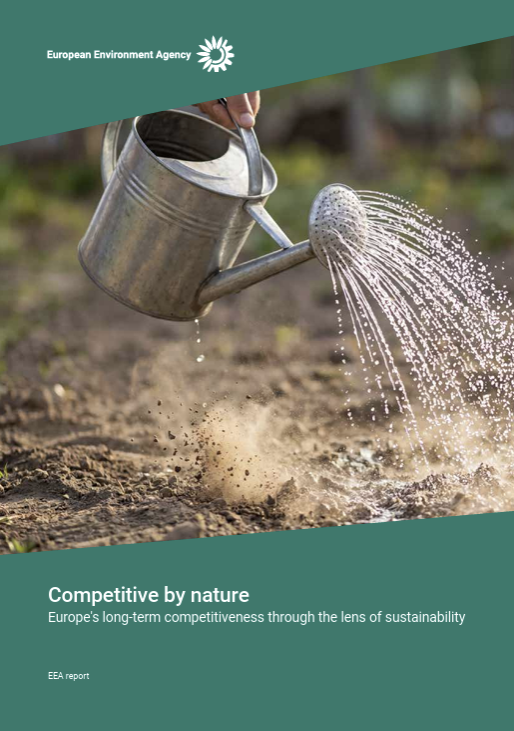
This report explores the challenges and opportunities that could shape the EU′s competitiveness up to 2040. It examines sustainable competitiveness through four interrelated dimensions: circularity and resource efficiency; decarbonisation and electrification; climate adaptation and resilience; nature protection and restoration.
__________
The decades leading to the mid-21st century are likely to be characterised by rapid technological transformation, growing economic uncertainty, demographic change and intensifying geopolitical competition. At the same time, accelerating climate change, biodiversity loss, pollution and wider environmental degradation will remain defining features of the global landscape.
These environmental pressures could amplify economic uncertainty, intensify competition for resources and contribute to geopolitical tensions. This would result in a cascading and mutually reinforcing polycrisis.
For Europe, this period of profound change will bring both challenges and opportunities. Europe′s socio-economic model is shaped by decades of economic integration, social progress, democratic governance and increasingly ambitious environmental standards. However, it will face new tests of its competitiveness and resilience. Its capacity to respond will depend partly on whether environmental sustainability is treated as an integral facet of Europe′s economic foundations rather than as a separate policy objective.
Over recent decades, Europe has undergone significant structural economic change. Economic activity has increasingly shifted towards services, knowledge-intensive sectors and higher-value manufacturing. Meanwhile, parts of its heavy industry and resource-intensive production have relocated abroad.
Together with technological improvements and environmental and climate policies, this transformation has contributed to reduced greenhouse gas (GHG) emissions and pollution levels. It has also enabled Europe to position itself as a leader in environmental regulation and sustainable development.
In contrast, however, it has also increased Europe′s dependence on global supply chains for critical raw materials (CRMs), technologies, industrial inputs and manufactured goods. As a result, part of Europe's environmental footprint has been displaced beyond its borders. At the same time, Europe has increasingly apparent vulnerabilities related to resource security, technological dependence and industrial resilience.
The compound pressures of the coming decades are likely to test this model further. Climate change, environmental degradation, geopolitical fragmentation, technological disruption and growing competition for resources could affect productivity, investment, supply security and economic stability.
In this evolving context, competitiveness may increasingly depend on Europe′s capacity to:
- anticipate and withstand shocks;
- reduce strategic dependencies;
- manage resource demand;
- maintain the natural systems on which economic activity and societal well‑being depend.
add attached
EEA Oct 2026
Collegati
GHG emissions of all world countries / 2026 JRC report
Si propone un aggiornamento dell’innalzamento del livello medio del mare a Venezia enfatizzando in particolare le variaz...
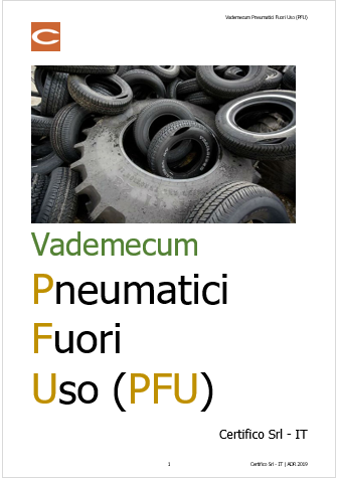
ID 8172 | Rev. 1.0 del 21 Settembre 2026 / Vademecum completo in allegato
La gestione degli pneumatici fuori uso e usati: qu...
ID 16563 | 05.05.2022 / Note allegate - Atteso Decreto MITE/MIPAAF
La Legge 27 aprile 2022 n. 34 di conversione de...
Testata editoriale iscritta al n. 22/2024 del registro periodici della cancelleria del Tribunale di Perugia in data 19.11.2024