Featured
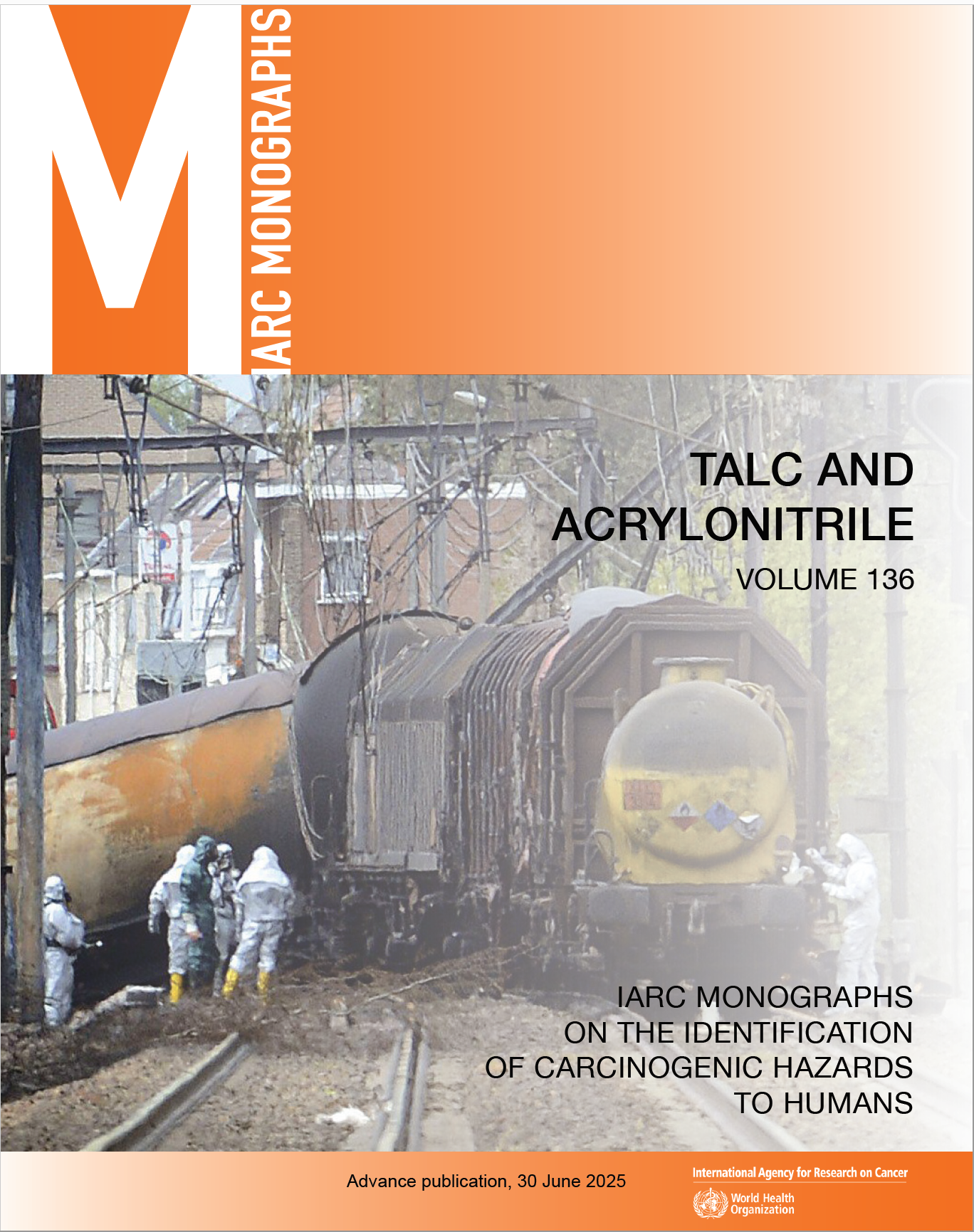
IARC Monographs Volume 136
IARC Monographs Volume 136 / Talc and Acrylonitrile
ID 24299 | 18.07.2025 / Attached
This volume of the IARC Monographs provides evaluations of the carcinogenicity of talc and acrylonitrile.
Talc was defined as mineral (natural) or synthetic product, a hydrated magnesium silicate, that exists in both lamellar and fibrous (including asbestiform) types. Asbestiform talc is not asbestos; however, asbestos is present in some talc deposits and has been shown to contaminate some talc products. A mineral with a high production volume, talc is used in plastics, ceramics, paint, paper, roofing materials, rubber products, animal feed, food, fertilizers, cosmetics, and pharmaceuticals. It is also used in clinical settings for pleurodesis. Occupational exposure to talc dust occurs predominantly during mining and milling, mainly via inhalation, but can also occur among workers in downstream industries. The general population may be exposed via talc-based consumer products, and pathways of exposure include ingestion, inhalation, and dermal contact, including via the perineum.
Acrylonitrile is a chemical with a high production volume that is mostly used as a monomer to prepare polymers for the manufacture of fibres for textiles (acrylic fibres) used in clothing and carpets and other textiles, resins, synthetic rubber, and plastics. Occupational exposure occurs mainly in production industries via inhalation and dermal routes. The general population can be exposed to acrylonitrile via cigarette smoking, air pollution, and contact with contaminated consumer products.
Conclusions
An IARC Monographs Working Group reviewed evidence from epidemiological studies, cancer bioassays in experimental animals, and mechanistic studies to assess the carcinogenic hazard to humans of exposure to these agents and concluded that:
- Talc is probably carcinogenic to humans (Group 2A);
- Acrylonitrile is carcinogenic to humans (Group 1).
IARC
...
Collegati
Allegati
|
Descrizione |
Lingua |
Dimensioni |
Downloads |
 |
|
EN |
9763 kB |
945 |