Microplastic pollution from textile consumption in Europe
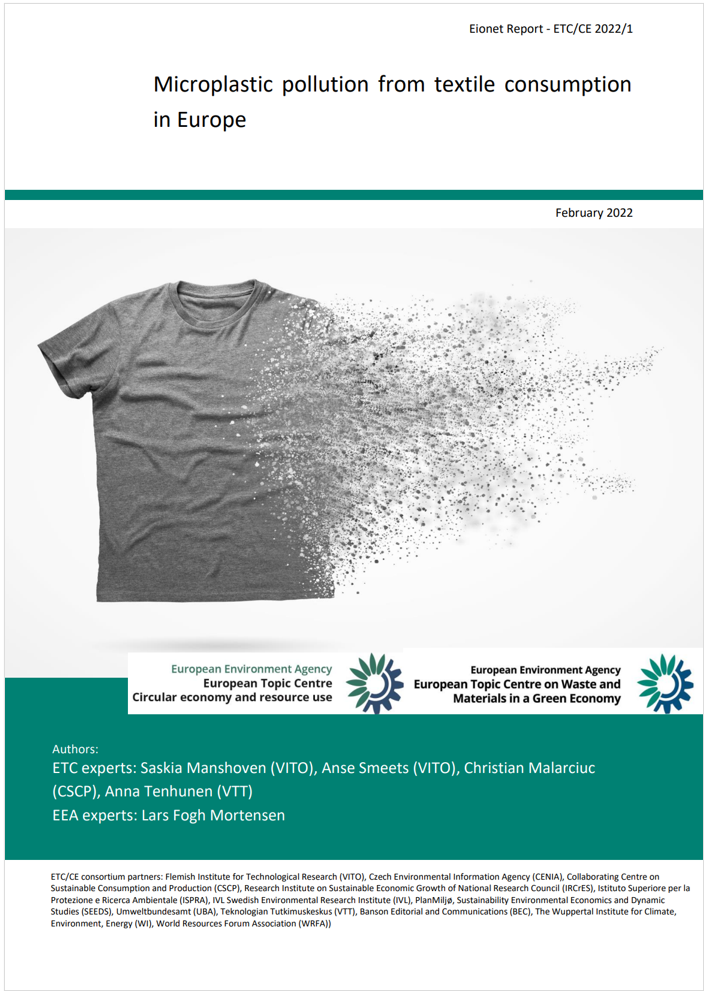
Microplastic pollution from textile consumption in Europe
EEA, February2022
This ETC/CE report provides the detailed analysis underpinning the EEA Briefing “Microplastics from textiles: towards a circular economy for textiles in Europe”.
In recent years, concern about microplastic pollution in our seas, land and air has increased. While some microplastics are produced on purpose for dedicated applications, most result from weathering and degradation of plastic products. Among other sources, wearing and washing of synthetic textiles is regarded as a significant source of microplastics in the environment, responsible for the discharge of between 0.2 and 0.5 million tonnes of microplastics into the oceans each year.
The aim of this report is to contribute to an improved understanding of microplastics release from textiles and their effects on the environment and human health. Next, the report explores potential approaches to reduce their release from textiles.
Microplastic fibres have been found everywhere on Earth, in sediments, in bottled drinking water and even in Arctic ice. Fibres are the most common shape of microplastic found in wastewater effluent and typically consist of polyester, acrylics, nylon and polypropylene, which are the plastics most commonly used in clothing.
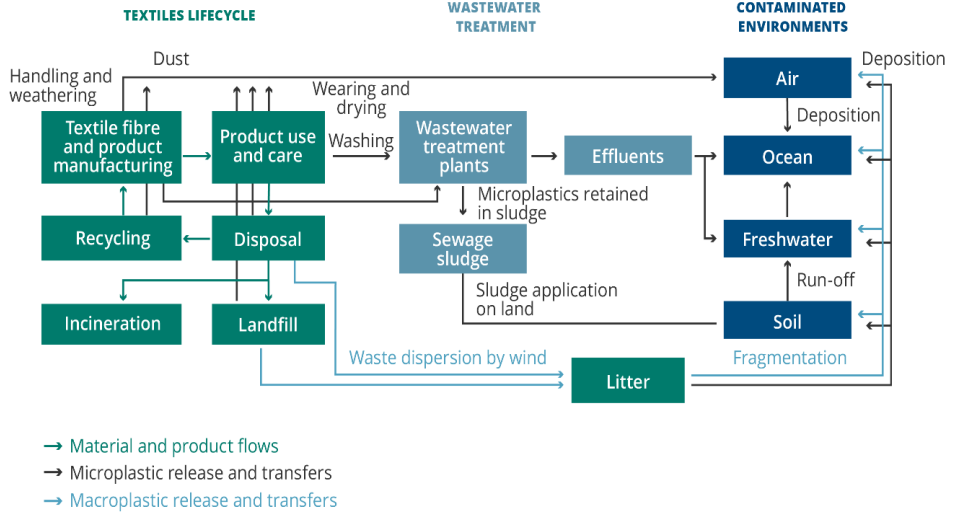
Microplastic release occurs throughout the textiles value chain. In most research, the focus is on microfibre release through the washing of synthetic textiles, considering wastewater as the predominant pathway for leakage into the aquatic environment . Microfibres are, however, also emitted during textile manufacturing, garment wearing and end-of-life disposal, and are dispersed to water, air and soil (see following sections). Discarded fishing nets, estimated around 500,000 tonnes per year worldwide, are also a source of secondary microplastic directly emitted to the ocean.
Figure - Release and fate of microplastic fibres from textiles
[...]
Fonte: EEA
Allegati
|
Descrizione |
Lingua |
Dimensioni |
Downloads |
 |
|
EN |
1700 kB |
8 |